
Submitting your work to a book award program is a milestone moment. Whether you are chasing a prestigious gold seal or looking to boost your visibility on Amazon KDP, awards are a powerful way to validate your hard work and build trust with parents and librarians.
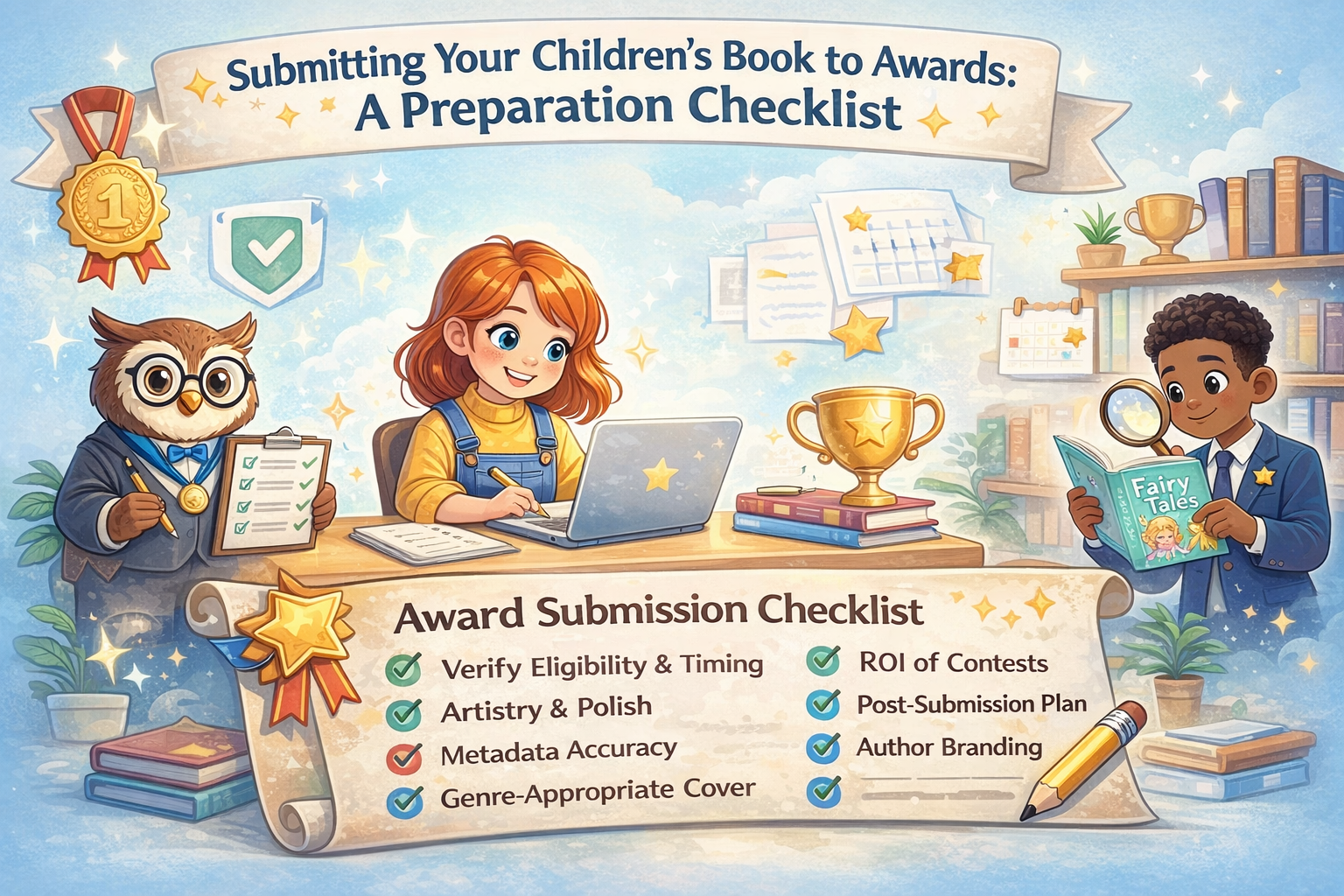
However, a great story isn't always enough to win. Judges look for a total package—professionalism, polish, and precision. To help you give your manuscript the best possible shot, we’ve compiled this practical submission checklist specifically for children’s book authors.
1. Verify Eligibility & Timing
Before you spend a single dollar on entry fees, read the fine print. Many authors are disqualified simply because they missed a technicality.
· The Window: Does your publication date (recorded in your metadata) fall exactly within the contest’s eligibility dates?
· The Format: Some awards only judge physical hardcovers, while others accept digital EPUBs or PDFs. Ensure your book matches their requirements.
· Imprint Rules: Confirm that the award specifically allows self-published or "indie" imprints.
2. Excellence in Artistry & Polish
In the world of children's literature, sloppiness is a deal-breaker. Judges will often put a book down if the formatting feels "amateur."
· Visual Integrity: Are your illustrations high-resolution and professionally rendered? (No pixelation or stretched images).
· Text Layout: Ensure there are no widows, orphans, or text overlapping critical parts of the artwork.
· Final Draft: Double-check that you aren't accidentally submitting an older version of your manuscript.
3. Metadata & Technical Readiness
Metadata is the digital DNA of your book. If it’s messy, your book looks unprofessional before a judge even reads the first page.
· ISBN Accuracy: Your ISBN must be consistent across your submission form, your copyright page, and retail platforms.
· Category Precision: Don't just pick "Children’s Books." Choose the most specific sub-genre (e.g., Early Learning or Social Themes) to show you understand your market.
4. Genre-Appropriate Cover Design
Your cover is your first impression. It must look like it belongs on a bookstore shelf next to traditional bestsellers.
· Professionalism: Does the cover use professional typography and a style (Watercolor, 3D, Flat Art) that matches the interior?
· Thumbnail Test: Since many judges view entries digitally, does your cover look compelling even when it’s small?
5. Strengthening Your Author Brand
Judges often "Google" the finalists. They want to see an author who is serious about their career.
· The Website Check: Is your author website live, mobile-friendly, and free of broken links?
· The Media Kit: Do you have a "Press" page with high-res headshots, book blurbs, and your author bio written in the third person?
6. Assessing ROI (Return on Investment)
Not every award is worth the entry fee. Be strategic with your marketing budget.
· Value over Ego: Prioritize awards that offer tangible benefits: a recognized seal for your cover, editorial reviews, or social media features.
· Budgeting: Factor in the cost of entry plus the cost of shipping physical "judging copies" if required.
7. The Post-Submission Momentum
Don't wait for the results to start planning. If you place as a finalist or a winner, you need to move fast.
· Update Strategy: Have a plan to update your Amazon A+ content and your website banner the moment the news breaks.
· Draft the News: Prepare a draft for your newsletter and social media followers so you can share your success instantly.
Final Thoughts
An award is a marketing megaphone—it amplifies the quality you have already created. If your book is professionally illustrated, edited, and formatted, you are already halfway to the podium.
Is your book missing that professional edge? Explore our Illustration Services or use our Free Author Tools to ensure your project is 100% ready for the spotlight.