
In the world of self-publishing, there is a brutal truth that every author must face: Children do judge a book by its cover. In fact, on Amazon KDP, your story doesn't even get a chance to be read if the illustrations don't do the heavy lifting first. Most children’s books fail not because the plot is weak, but because the visual "hook" isn't strong enough to stop the scroll.
After illustrating over 450+ children’s books and working as a Level 2 seller on Fiverr for nearly a decade, I’ve seen firsthand why some books become bestsellers while others gather digital dust.
Let’s dive into how illustrations directly impact your KDP royalties and the common mistakes you must avoid.
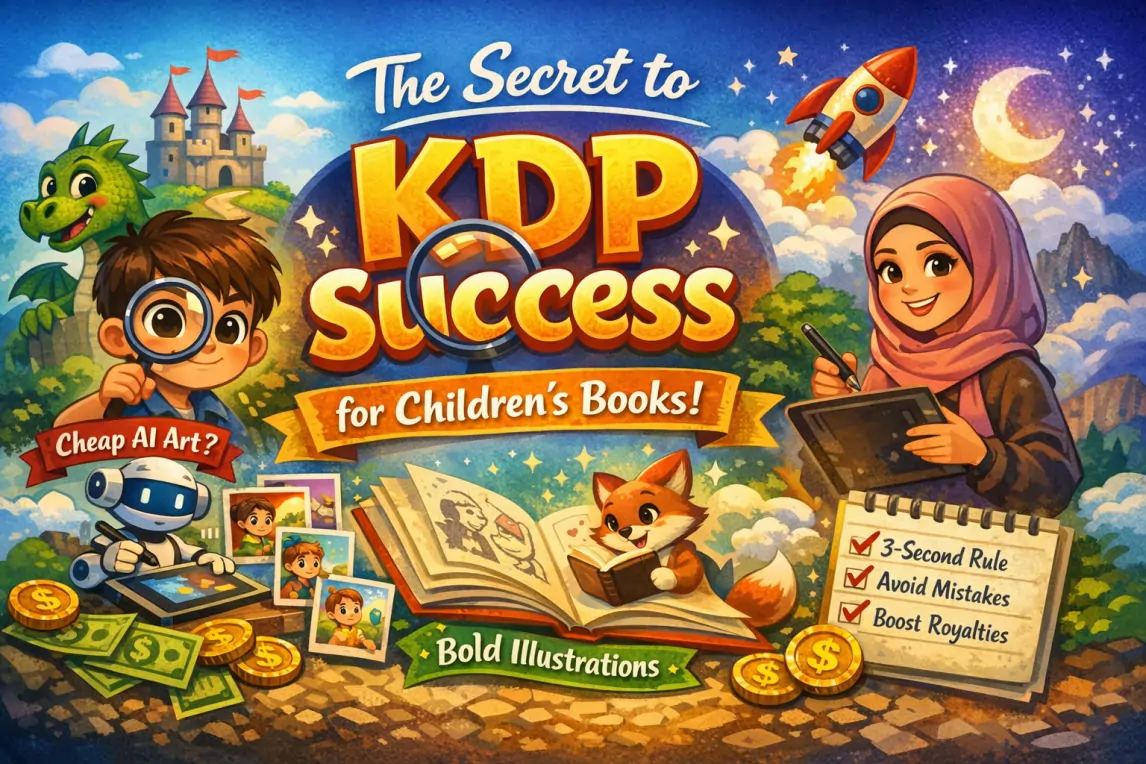
1. The 3-Second Rule: Why Illustrations are Your Only Sales Trigger
When a parent or teacher searches for a book on Amazon, they aren't looking at your prose. They are scanning thumbnails.
- The Thumbnail Battle: On a mobile screen, your book cover is the size of a postage stamp. If the picture book illustration isn't bold, high-contrast, and emotionally engaging, it disappears.
- The Emotional Connection: Children decide if they like a book in under 3 seconds. They look for "eye contact" with characters or vibrant colors that promise an adventure.
- The "Look Inside" Feature: When a buyer clicks "Look Inside," they are checking if the interior quality matches the cover. If there is a "quality gap" between a great cover and mediocre inside pages, you lose the sale instantly.
2. Common Mistakes That Kill KDP Success
Many self-published authors try to save money in the wrong places. Here are the most frequent errors I see in the KDP marketplace:
A. The Trap of "Cheap" AI Illustrations
AI might be fast, but it lacks soul and consistency.
- The Consistency Issue: In a children’s story, your main character must look exactly the same from Page 1 to Page 32. AI often struggles with "character persistence." If the boy's hair color or shirt style changes slightly on every page, children get confused, and the immersion is broken.
- Ethical Red Flags: Savvy parents and librarians can often spot AI art, and many are now actively avoiding it in favor of "Human-Created" heart-led stories.
B. Ignoring Color Psychology
I often see books for toddlers using dark, muddy colors, or books for older kids looking too "babyish."
- Example: For a bedtime story, you need "Soft Illustration Styles" with pastels and gentle gradients. For an adventure book, you need "Solid, Vibrant Art" that pops. Using the wrong vibe sends a mixed signal to the buyer’s brain.
C. Text-Heavy Pages & Bad Formatting
A children’s book illustrator isn't just an artist; they are a layout designer. A common mistake is not leaving "White Space" for text. If the illustration covers the whole page without a clear area for the story, the text becomes unreadable—especially on Kindle devices.
3. What Top-Selling KDP Authors Do Differently
The "Top 100" in the Children’s Book category on Amazon all have a few things in common:
Character Flow and "The Gaze"
Professional illustrations guide the reader's eye. In a standard 32-page layout, the characters should generally move from Left to Right. This mimics the "page-turning" action and keeps the momentum of the story going.
Print-Ready Precision (CMYK vs. RGB)
This is a technical nightmare for new authors. Amazon KDP uses specific printers. If your illustrator doesn't understand KDP-safe margins, bleed settings, and CMYK color profiles, your beautiful digital art will look dull and cropped when it arrives as a physical book.
4. Expert Insight: The Pattern of Success
After years of refining the Kidillus brand and helping hundreds of authors navigate the transition from a Word Doc to a published masterpiece, I’ve noticed one pattern:
"The most successful authors treat their illustrations as a marketing investment, not a production expense."
Your illustrations are your marketing engine. They are what people share on Instagram, what kids point to in a bookstore, and what triggers that "Buy Now" button on Amazon.
5. How to Ensure Your Book is "KDP Ready"
If you are currently planning your project, ask yourself these three questions:
- Is my character "toy-ready"? (Is the design iconic enough to be remembered?)
- Does my cover work as a tiny thumbnail?
- Are my files formatted for both Ebook (Reflowable/Fixed) and Print (Bleed)?
At Kidillus Studio, we don't just "draw pictures." We build world-class assets that help you compete with big publishing houses. Whether you need a custom children's book cover that demands attention or professional KDP formatting that passes Amazon's quality check on the first try, we are here to help.
Final Thoughts
If you're serious about Amazon KDP success, professional illustration is not optional—it’s essential.
👉 Explore our Children’s Book Illustration Styles
👉 Get a Free KDP Illustration & Formatting Consultation
If you're still deciding between AI and custom artwork, you may also like our detailed guide on Custom Illustrations vs AI Art for Children’s Books.
About the Author: Aadil Khan is the founder of Kidillus Studio and a Level 2 Fiverr Seller with over 10+ years of experience specializing in KDP-compliant children's book illustrations.