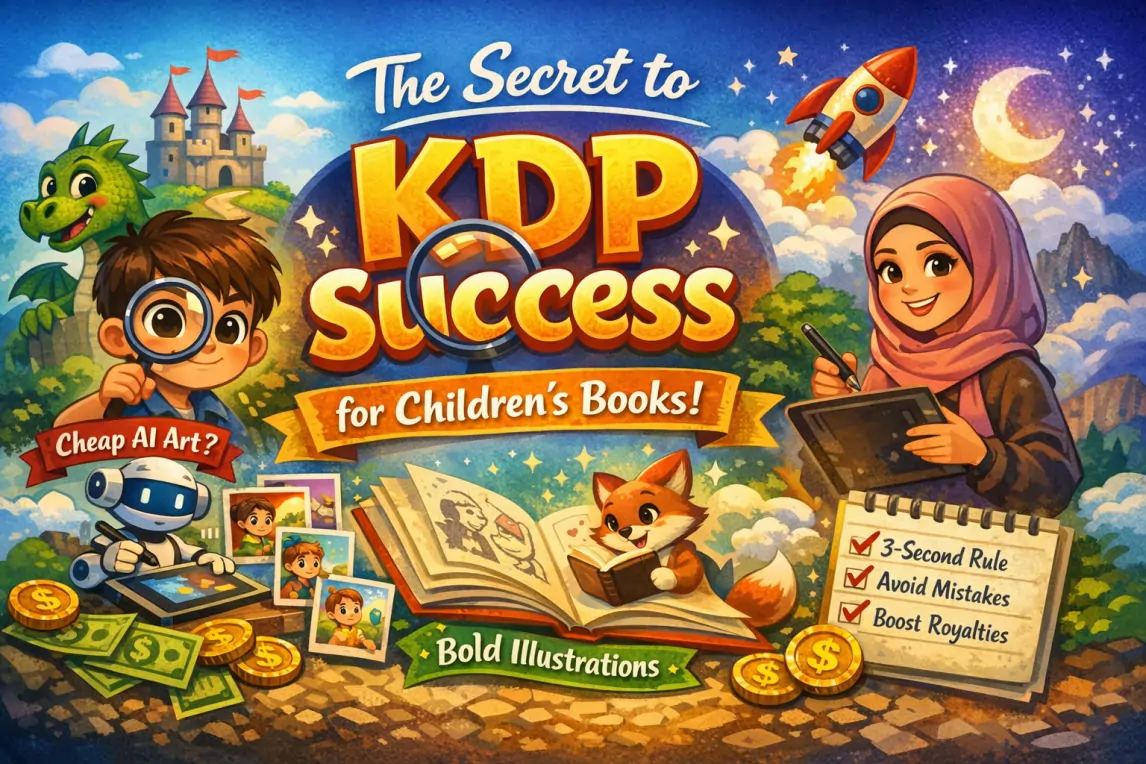

In the last two years, Artificial Intelligence has reshaped how we create content. With a simple prompt, tools like Midjourney or DALL-E can generate stunning visuals in seconds. For an indie author on a budget, the temptation is understandable: Why hire an artist when a computer can do it for free?
But in the delicate, emotional world of children’s literature, "fast" rarely means "good."
While AI creates images, human artists create stories. For authors targeting the competitive US and UK markets—where copyright laws are strict and reader standards are high—choosing between AI and custom illustration is not just an artistic choice; it’s a business decision.
Here is why the human touch still wins, every single time.
1. The Copyright Crisis (The Dealbreaker)
This is the single most important factor for any author planning to sell on Amazon KDP or IngramSpark.
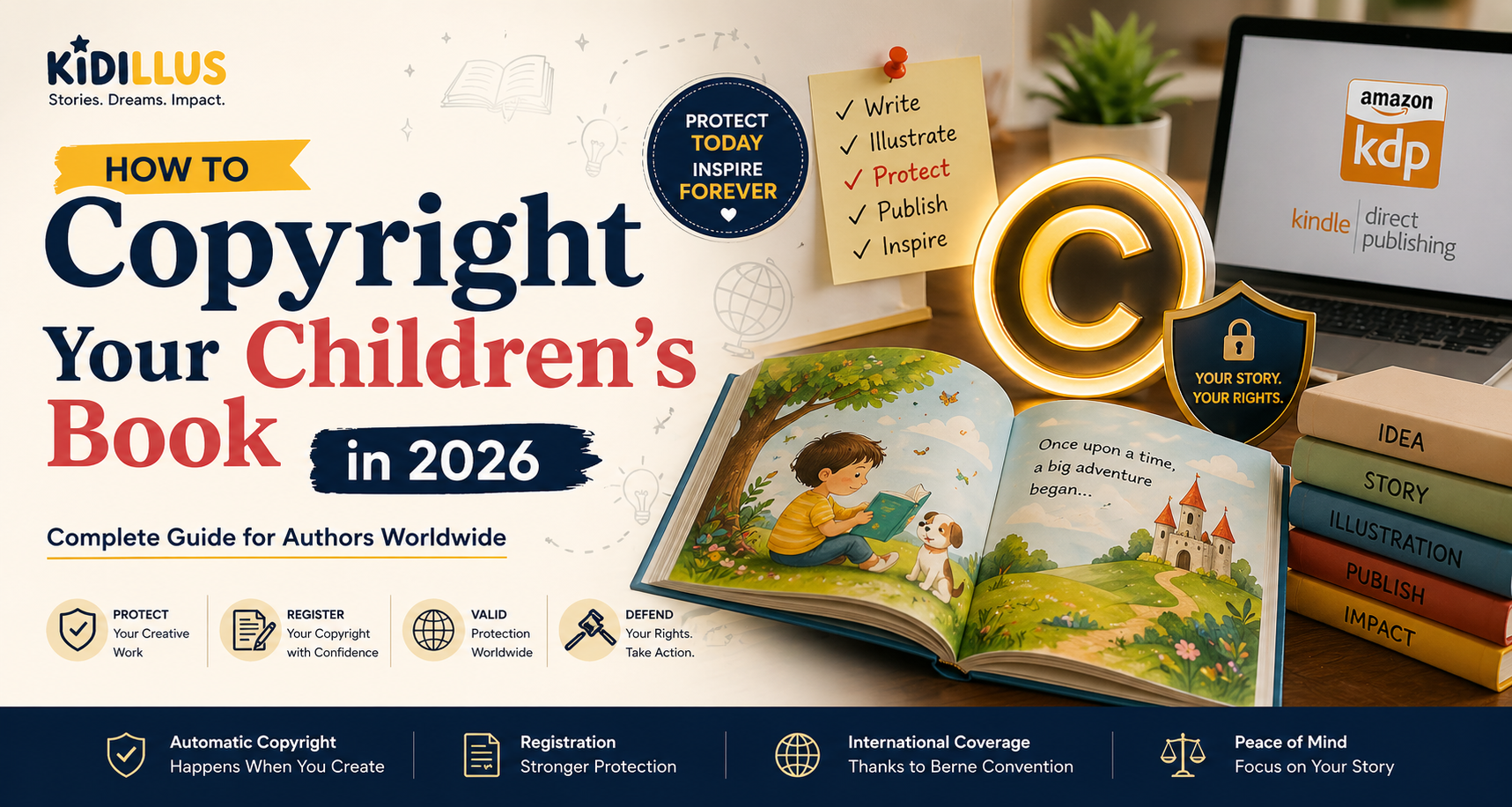
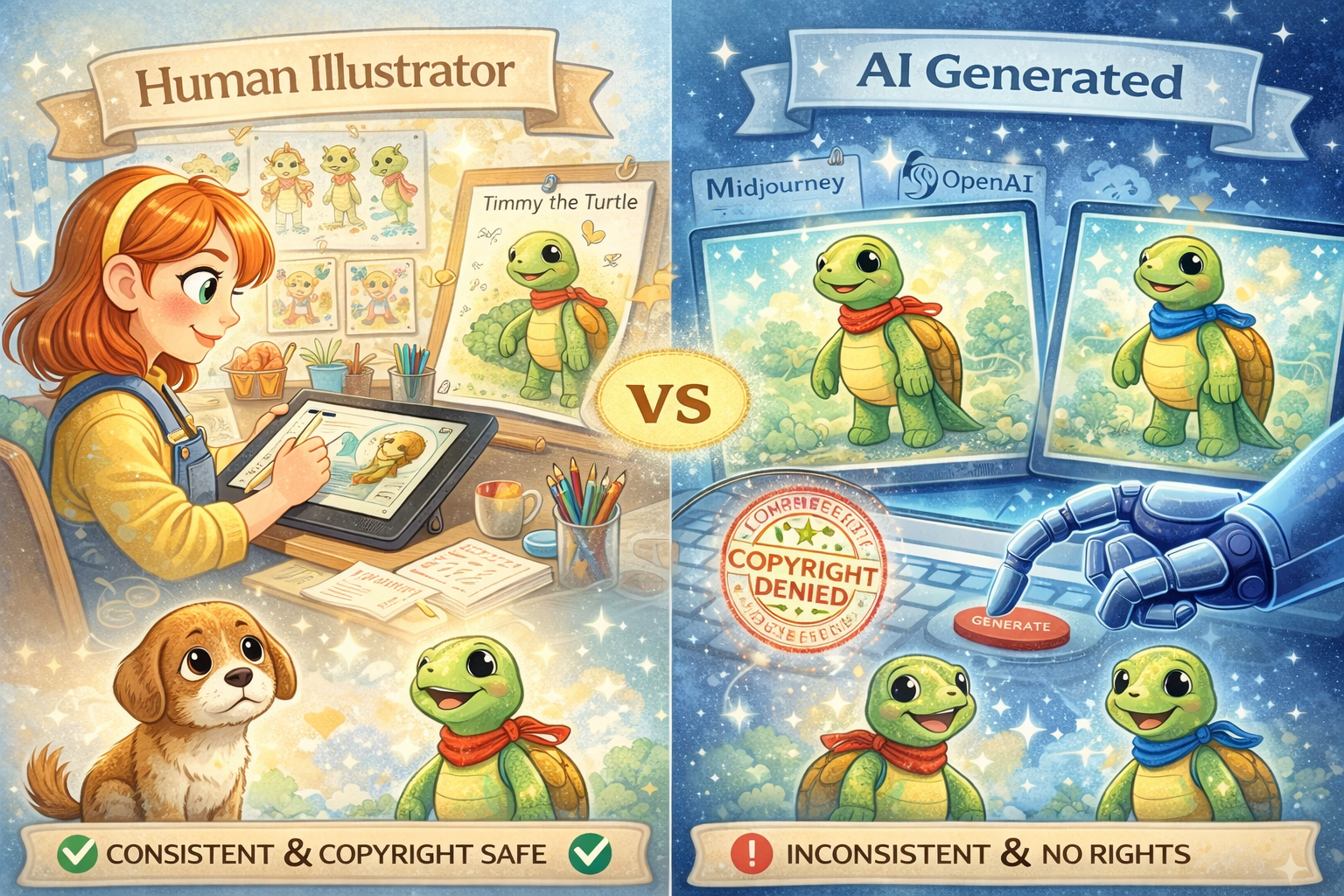
The Reality: As of 2026, the US Copyright Office has firmly stated that art created entirely by AI cannot be copyrighted.
If you illustrate your book using AI, you do not own the images. Technically, anyone could copy your book’s art and use it for their own project, and you would have little legal ground to stop them. When you hire a professional human illustrator from a platform like Kidillus, you receive a contract transferring the Commercial Rights to you. You own the assets, protecting your intellectual property for years to come.
2. Character Consistency: The AI Achilles' Heel
A children's book requires a character—let’s call him Timmy the Turtle—to look exactly the same on Page 1 as he does on Page 32. He needs to wear the same red scarf, have the same shell pattern, and express different emotions.
The Problem: AI struggles with "object permanence." It generates a new image every time. Timmy’s scarf might turn blue on page 5, or his shell pattern might change. The Human Touch: A human illustrator creates a Character Sheet. We know exactly how Timmy looks from the front, back, and side. We ensure that whether Timmy is crying, laughing, or sleeping, he is unmistakably Timmy. That consistency is what builds a bond with the young reader.
3. Emotional Nuance and Storytelling
AI is a mimic; it mimics art it has "seen" before. It doesn't understand heartbreak, joy, curiosity, or fear. It simply arranges pixels.
Children are incredibly perceptive. They connect with the soul of a drawing.
- AI can draw a "sad dog."
- A Human draws a dog whose eyes hold the specific sadness of waiting for his best friend to come home.
That subtle difference is what makes a child ask to read a book again and again. Human artists read your manuscript, understand the emotional beat of the scene, and translate that feeling into color and line.
4. Collaboration and Vision
When you use AI, you are fighting with a prompt box. You type, you hope, and you settle for "good enough."
When you work with a professional illustrator, you enter a partnership. You can say, "Can we make the room look a bit messier to show he was playing?" or "Can we hide a little ladybug on every page for kids to find?"
These specific, creative details—Easter eggs, visual subplots, and intentional pacing—are born from human collaboration. They are what turn a "product" into a "work of art."
5. The Ethical Stance
The children's book community is tight-knit. Librarians, teachers, and parents in the US and UK are increasingly vocal about supporting human creativity. Many bookstores are now curating sections specifically for "Human-Illustrated" books.
By hiring an artist, you have a story to tell: “This book was hand-crafted by a global team of creatives.” It adds a layer of prestige and authenticity to your author brand that AI simply cannot provide.
Final Thoughts: Invest in Your Legacy
AI is a fantastic tool for brainstorming or generating rough ideas. But your book is your legacy. It is something you want to leave behind for your children and grandchildren.
Don't let your story be illustrated by an algorithm that doesn't care about your characters. Give your book the care, protection, and emotional depth it deserves.
Ready to bring your story to life with real artistry? Browse our Portfolio or get a Custom Quote today to match with a professional illustrator who cares about your story as much as you do.