
Why Illustration Style Matters in Children’s Books
Children are primarily visual learners. In early reading stages, illustrations often carry more weight than text.
Based on publishing research and industry experience:
- Most children look at illustrations before they read the words
- Bright, expressive artwork creates an emotional connection with young readers
- The right illustration style increases reading interest, engagement, and comprehension
Choosing the wrong illustration style can weaken even a well-written story. Choosing the right one can transform a book into a memorable experience.
https://kidillus.com/illustration
1. 3D Children’s Book Illustration Style
What Is 3D Illustration?
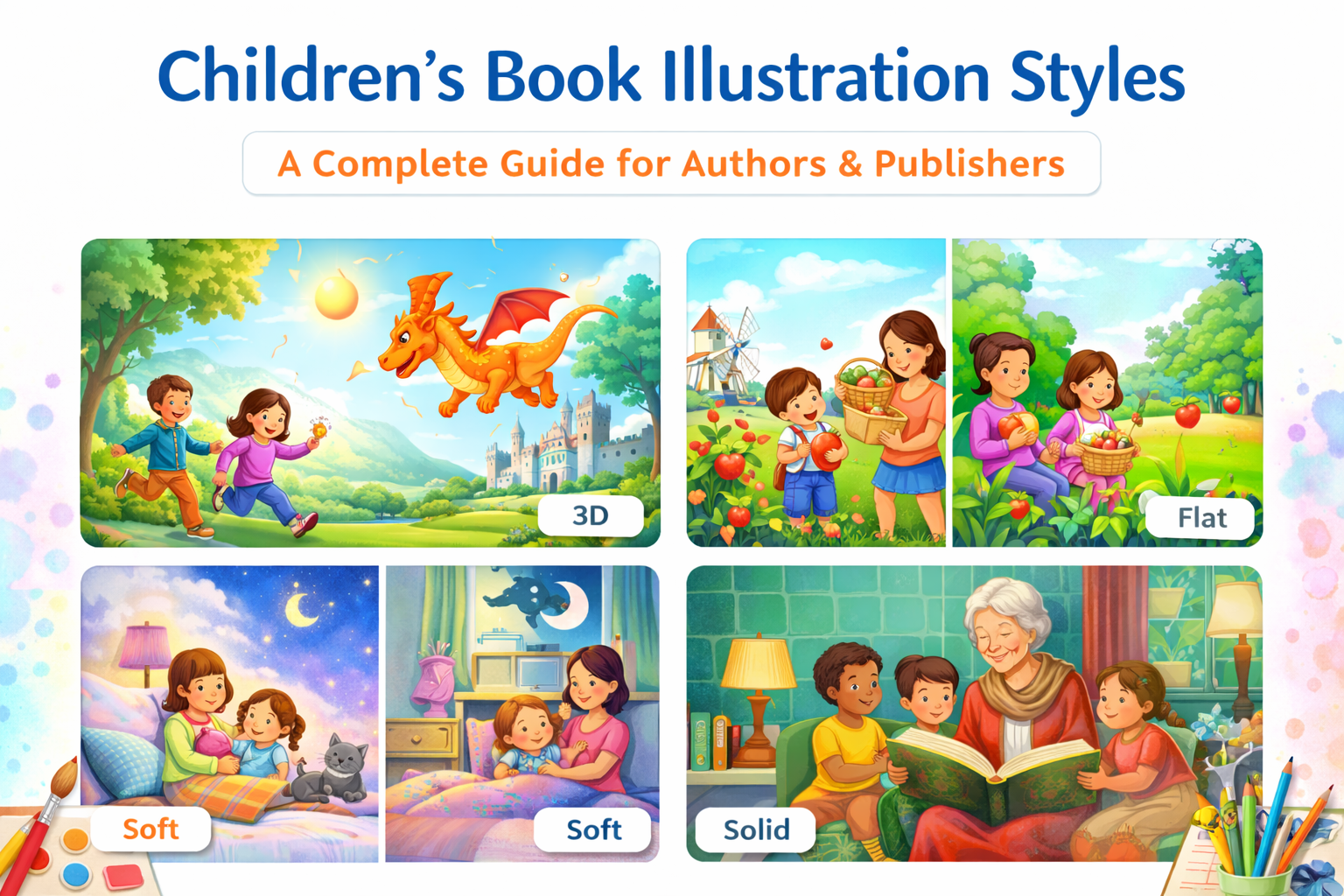
3D illustration uses realistic depth, lighting, shadows, and detailed environments to create a cinematic, animated-film look. This style is often compared to high-quality animated movies and modern digital storytelling.
Best Suited For:
- Adventure stories
- Fantasy and magical worlds
- Hero-led or action-driven narratives
- Children aged 6–10
Advantages:
- Characters feel lively, dynamic, and immersive
- Action scenes appear powerful and engaging
- Gives books a premium, high-end professional appearance
Things to Consider:
- Requires more time and budget than simpler styles
- Can be visually overwhelming for very young children (ages 2–4)
https://kidillus.com/illustration?cat=3d
2. Flat Illustration Style
What Is Flat Illustration?
Flat illustration is built using simple shapes, clean lines, and bold colours, with minimal shadows or depth. The focus is clarity rather than realism.
Best Suited For:
- Early learning books
- Alphabet, numbers, and colour books
- Toddlers aged 2–5
Advantages:
- Clean and easy-to-understand visuals
- Helps children focus on objects and concepts
- Print-friendly and cost-effective
Things to Consider:
- Limited emotional and storytelling depth
- Less suitable for complex narratives
https://kidillus.com/illustration?cat=flat
3. Soft Illustration Style
What Is Soft Illustration?
Soft illustration uses gentle colour palettes, smooth textures, and calm compositions. This style creates a warm, comforting atmosphere and supports emotional storytelling.
Best Suited For:
- Bedtime stories
- Emotional or moral-based stories
- Parent-child bonding books
- Children aged 3–7
Advantages:
- Creates a relaxing and soothing reading experience
- Strong emotional connection with young readers
- Ideal for story-driven picture books
Things to Consider:
- Not ideal for high-energy or comedic stories
- Very light colours may require careful print adjustment
https://kidillus.com/illustration?cat=soft
4. Solid Illustration Style
What Is Solid Illustration?
Solid illustration features strong outlines, rich colours, and well-defined scenes. It offers structure and visual clarity while maintaining storytelling depth.
Best Suited For:
- Traditional children’s stories
- Family, culture, and value-based books
- Classroom and educational reading
Advantages:
- Clear, impactful visuals
- Characters are easy to recognise and remember
- Excellent long-term readability
Things to Consider:
- Can feel heavy for playful or modern story concepts
Quick Comparison of Illustration Styles
Style Best Age Group Mood Ideal Use
3D 6–10 Energetic Adventure, fantasy
Flat 2–5 Fun & simple Learning books
Soft 3–7 Calm & emotional Bedtime stories
Solid 4–8 Strong & clear Moral & classic stories
How to Choose the Right Illustration Style
Before selecting an illustration style, ask yourself these key questions:
- What is the target age group?
- What is the mood of the story — playful, calm, or adventurous?
- Will the book be printed or digital?
- What is the budget and production timeline?
Example:
- Alphabet book → Flat illustration
- Bedtime story → Soft illustration
- Fantasy adventure → 3D illustration
Final Thoughts
Children’s book illustration is not just artwork — it is a vital storytelling tool. The right illustration style can:
- Increase reader engagement
- Strengthen emotional connection
- Help a book stand out in a competitive market
Whether you are a first-time author or an experienced publisher, choosing the right illustration style is one of the most important decisions in the book-creation process.